




















Kenya, US signs Strategic Health Partnership
The US government will invest equivalent to USD 1.6 Billion in Kenya’s health sector over the next five years.

By Wakhungu Andaje
After a short stint of health funds freezing by the Unites States after Donald Trump assumed office as the President, its all smiles for Kenya after a health cooperation framework was signed between the two countries.
It is now official that the United States has agreed to invest Ksh 208Billion in Kenya’s health sector rekindling the good relationship between the two nations.
In a statement released by the Prime cabinet secretary for foreign and Diaspora affairs Musalia Mudavadi it reads: Kenya and the United States have entered a new chapter in our long-standing partnership by signing a strategic health cooperation framework, through which the US government will invest equivalent to USD 1.6 Billion in our health sector over the next five years.
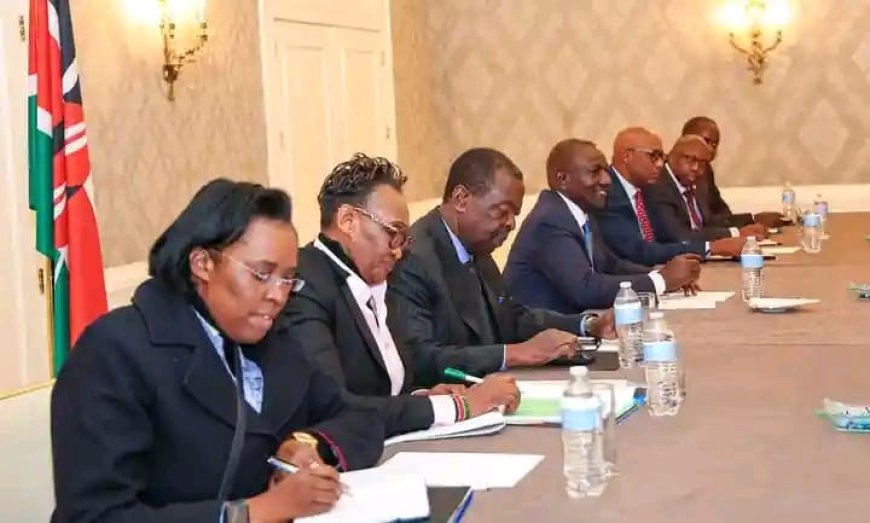
PCS Musalia Mudavadi 3rd left followed by President William Ruto with other dignitaries attending the International finance corporation meeting chaired by its managing director Makhtar Diop.
According to Musalia who accompanied President William Ruto to the high profile visit to the US following President Donald Trump invitation, he said it marked the first agreement of its kind between the Donald Trump Administration and an African nation, underscoring Kenya’s growing leadership in shaping modern, self-reliant health systems on the continent.
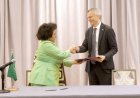
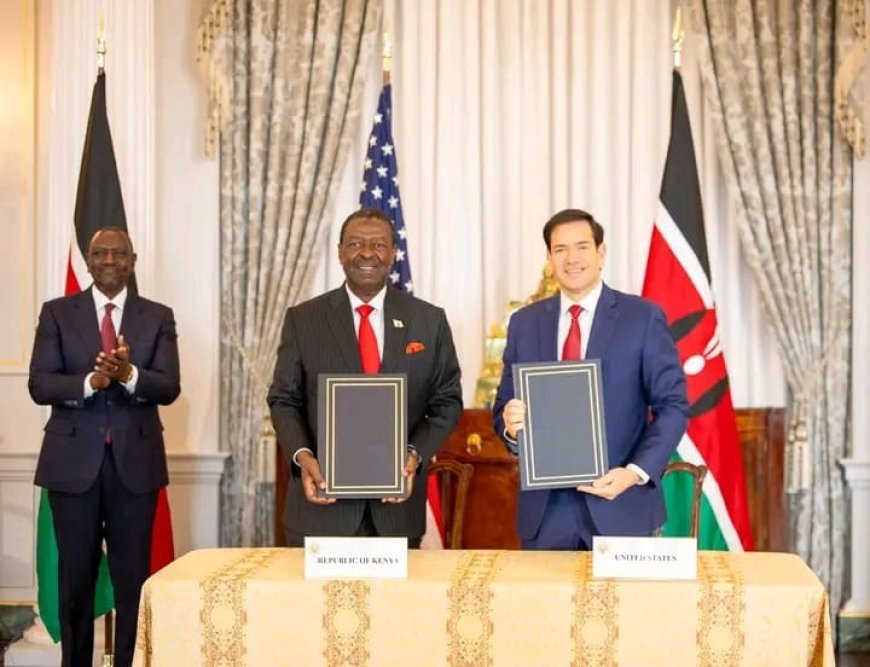
The new funding mechanism partnership which was signed by the Kenya PCS Musalia Mudavadi and the US secretary of state Marco Rubio aligns with the American First global health strategy released in September 2025, and which emphasizes efficiency, reduced dependency and strengthened bilateral agreements that will secure the shared interests of both nations.
Musalia commented that through the cooperation framework, the US will directly channel its financial support into the Kenya’s health care systems including the social health authority (SHA), the digital health authority and (KEMSA) in a move that will reignite transparency, sustainability and national ownership.
With the framework in place 515 laboratory professionals and 13,293 health care workers will be all absorbed into the Kenya public service 2028 that includes a jointly developed co-financing plan covering laboratory systems, surveillance, workforce strengthening and essential health commodities.
Kenya will have now to assume its procurement and distribution responsibility of key commodities trough (KEMSA) by December 2026.
The US contributions to Kenya comes in the wake of the country’s ongoing commitment to increase its county and national annual health budgets from Ksh 10Billion for the FY 2026/27 ,Ksh 20 Billion FY 27/28, Ksh 35Billion FY 28/29, Ksh 50Billion FY 29/30.
The PCS assured Kenyans that by 2031, the country will be in full control of the health sector and its human resource following the United States funding of USD 141 Million (Ksh.18Billion).
“Through this landmark memorandum of understanding Kenya has strengthened its national health sovereignty and further deepened its alignments with national drivers such as the bottom up economic transformation agenda (BETA), universal health care (UHC) and vision 2030to enhance workforce capacity,” he said.
At the same time Kenya and the US has agreed to cement their African growth and opportunity act (AGOA) bilateral trade agreement.
The Prime cabinet secretary for foreign and Diaspora affairs Musalia Mudavadi who accompanied President William Ruto for a crucial meeting with the United States trade representative Ambassador Jamieson Greer said the move to extend the (AGOA) for one more year will give the US government to craft a stronger and comprehensive programme that will benefit both nations.
“Our discussions zeroed on the development of a new and better bilateral trade agreement that will steer Kenya –US economic partnership to greater heights as we are hell bend on working on a common framework that will bring on board fresh and new opportunities to bolster trade, strengthen modern working relationship that will harness the interests of our two nations.” Said Musalia.
The PCS also pointed out that already they have identified key potential sectors to be expanded including apparel and textiles, agriculture, leather and footwear chemicals and pharmaceuticals and ICT and digital services.
Musalia said these important areas were important as they played a vital role in creating job opportunities, boosting export earnings besides attracting various investments and enhancing value chains across Kenya.
Earlier PCS Musalia Mudavadi accompanied President William Ruto to meet the managing director of International finance corporation Makhtar Diop to discuss how the (IFC) can partner with Kenya to improve its development in four transformative sectors.
He said Kenya was committed to ensure that it achieves faster broader and more inclusive development by putting every key economic driver in its rightful place.
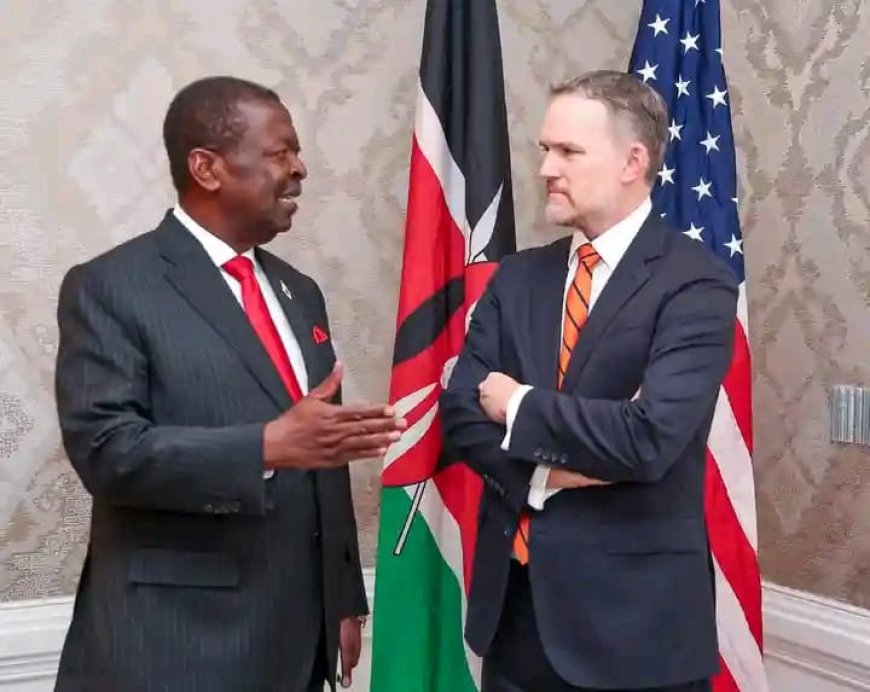
Kenya's Prime cabinet secretary for foreign and Diaspora affairs Musalia Mudavadi with United States trade representative Ambassador Jamieson Greer after holding discussions to extend Kenya's AGOA period to one more year.
“The international finance corporation is the World’s largest development institution dedicated to supporting the private sector in emerging economies and among our four areas we discussed incudes the dualling of 2,000 kilometres of roads to boost production, open new corridors and accelerate and ease the movement of goods across the country.
Also top on the list was the construction of state of the art terminal and runways at the Jomo Kenyatta international airport (JKIA) which will put Kenya on the international map as far Africa’s aviation and connectivity hub is concerned.
The expansion of the Kenya’s energy generating capacity from 3,000 to 10,000 megawatts within seven years was also given priority as it will improve affordable, reliable and clean power within homes.
President Ruto assured the financing body (IFC) that Kenya has so far undertaken vital legislative and policy reforms among them updating the public private partnership framework, introduction of water purchasing agreements that will attract private capital for large water and infrastructure projects.
He said the reforms were meant to attract new investment s and enhance water security and offer sustainable development for Kenyans
What's Your Reaction?