





















Africa fertilizer, soil health launched to secure food future
The sector targets to benefit small scale farmers, who largely contributes a lot to the continents food production.

BY WAKHUNGU ANDANJE
Africa is keen on securing its food system by putting in place measures that will see the continent safeguard its agricultural future.
This was realized after the launch of the African fertilizer and soil health in Dakar Senegal recently.
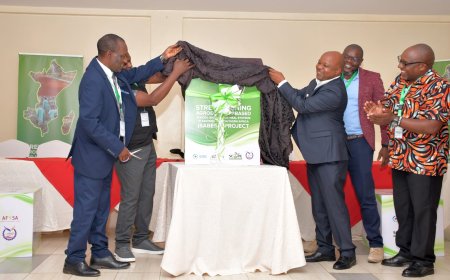
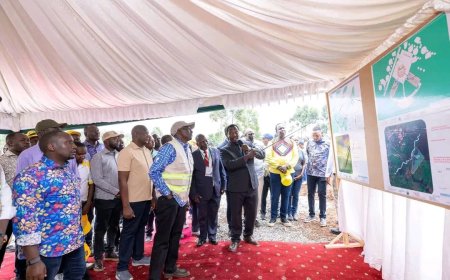
On 1 September, the Africa fertilizer industry development association was officially launched during a special event on “advancing the momentum of the implementation of the Africa fertilizer and soil health plan”, held on the margins of the Africa food systems forum 2025.
The event was hosted by the African union development agency-NEPAD (AUDA-NEPAD), the African union commission (AUC), Alliance for a green revolution in Africa (AGRA), forum for agricultural research in Africa (FARA), and the coalition of implementors for fertilizer and soil health (CIFSH). The association aims to bring together Africa’s fertilizer sector, besides strengthening collaboration, advocacy, and investment across the continent.
The sector targets to benefit small scale farmers, who largely contributes a lot to the continents food production.
This is set to become a major milestone toward better access to quality fertilizers and sustainable soil management.
Why Soil Health Matters Healthy soils are the foundation of Africa’s food security as more than 60 percent of Africans depend on agriculture for their livelihoods.
Despite their dependent on agriculture, these farmers face declining soil fertility.
There is need to restore these soils and ensure access to affordable fertilizers which is key to boosting productivity, adapting to climate change, and feeding a rapidly growing population.
A Continental Push for Action Moses Vilakati, commissioner for agriculture, rural development, blue economy, and sustainable environment at the African union commission (AUC), stressed the need of addressing soil health challenges.
After assuming office in March 2025, he has prioritized eight key areas to implement both the Nairobi and Kampala declarations.
“Our priorities include resuscitating the African centre for fertilizer development, establishing regional fertilizer blending facilities, and advancing soil mapping to enable context-specific, evidence-based decision-making,” he said.
Already his office has rolled out a 100-day plan that has laid ground for long-term action over the next four years.
The event has highlighted the power of multi-stakeholder partnerships in transforming agriculture with governments, the private sector, youth, women, and technical experts being brought on board as they all play critical roles in improving soil health.
This inclusivity ensures that vulnerable groups gain equitable access to resources, training, and decision-making roles that are an essential element of Africa’s agricultural transformation.
Driving the Action Plan AUDA-NEPAD CEO, Nardos Bekele-Thomas hinted on the importance of coordinated continental action.
“The implementation of the 10-year action plan on fertilizer and soil health is now at the top of our agenda. We are domesticating the Nairobi declaration and helping regional economic communities establish regional hub with West and Southern Africa already having launched theirs, as East and North Africa ones also in the pipeline,” she said.
She revealed that AUDA-NEPAD was working with multiple development coalitions to ensure the plan is a success.
She continued, “The private sector coalition is represented here by some of its members that I’m advised will launch a new Pan-Africa fertilizer association at this event.
This is good news as it signals an acceleration in the implementation of the Nairobi declaration.
Let me take this opportunity to congratulate the new association and reaffirm our unwavering commitment to working with them” Innovation and Partnerships Dr.
Asseta Diallo, senior specialist, soil health & integrated management AGRA, addressed the link between soil health and resilient food systems.
“Sustainable soil health and equitable access to affordable fertilizers are central to Africa’s agricultural future. AGRA is committed to working with governments, the private sector, farmers, and partners to create enabling environments and innovations that restore soils, boost productivity, and secure a sustainable future for smallholders,” she said.
Larry Umunna, executive director of CIFSH, emphasized revitalizing institutions and building local ownership.
“Our coalition is focused on reviving the African centre for fertilizer development and promoting the Africa fertilizer and soil health action plan at both country and regional levels. We prioritize capacity building, resource mobilization, and leveraging research and innovation to improve fertilizer efficiency and build resilient agricultural productivity,” he added.
During the event, the participants further showcased revolutions in fertilizer formulations, soil testing technologies, digital tools, and modern agronomic practices already making an impact across Africa’s diverse agro ecologies.
The private sector’s mandate in delivering affordable, quality fertilizers and ensuring efficient supply chains for smallholder farmers was highlighted as crucial.
A Shared Commitment The event wrapped up with a collective pledge: as Africa works to boost agricultural productivity and resilience against climate change and population growth, the Africa fertilizer and soil health action plan and its partners are ready to deliver science-driven, inclusive solutions for a sustainable, food-secure future.
The event was convened to discuss the implementation of the Africa fertilizer and soil health Nairobi declaration.
The action-oriented interaction addressed the technical needs to implement the plan, the progress made so far and the ongoing initiatives.
The session discussed the key role of the coalitions and regional hubs as emphasized in the action plan including the private sector in driving the implementation of the Africa fertilizer and soil health action plan.
Emphasis was placed on the progress of the implementation at continental, regional and at countries level as well as the diverse nature of all players including the private sector and the need to tailor appropriate modalities for partnerships.
What's Your Reaction?