


















The AIC Church in the Wildwood: Inside Baringo's Oldest Colonial-Era Sanctuary
.The foundation of the Sabatia AIC church was established at the beginning of the Second World War in 1939. .Lembus Council of Elders urged to submit their input on how best to preserve this historical structure.

By Jeremiah Chamakany
The story of British colonial rule in Kenya will be told for several generations—not only because of the oppression and suffering inflicted upon native populations, but also because of the Christian gospel that arrived with it, completely changing the way Africans viewed the world as dictated by their cultural norms.
In Baringo, Africa Inland Church (AIC) faithful remember with nostalgia a sweet era gone by.
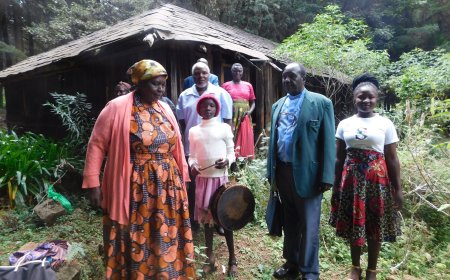
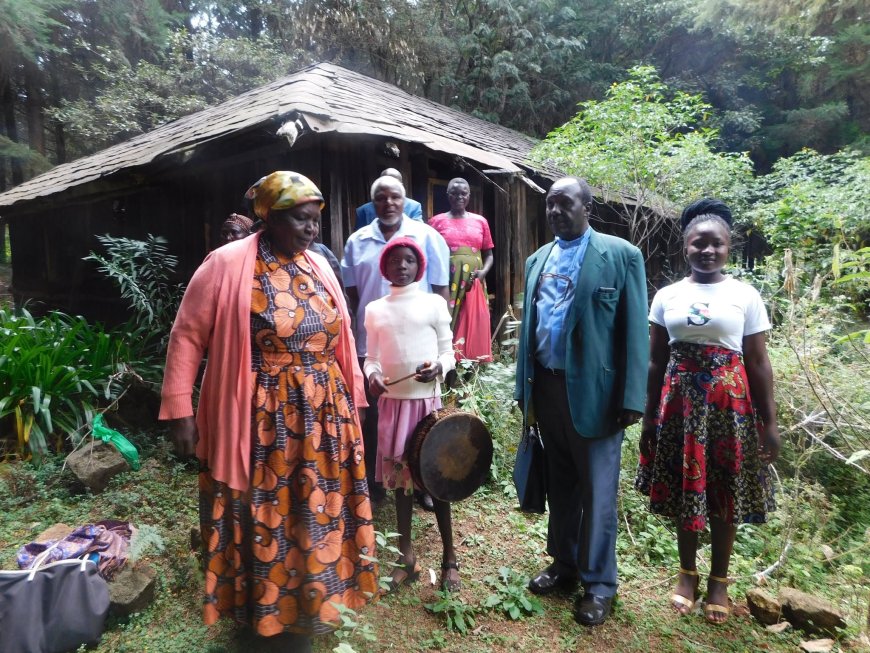
Deep in Sabatia Forest in Eldama-Ravine, an extension of the Mau Complex, a lonely structure stands hidden under the dense forest canopy.
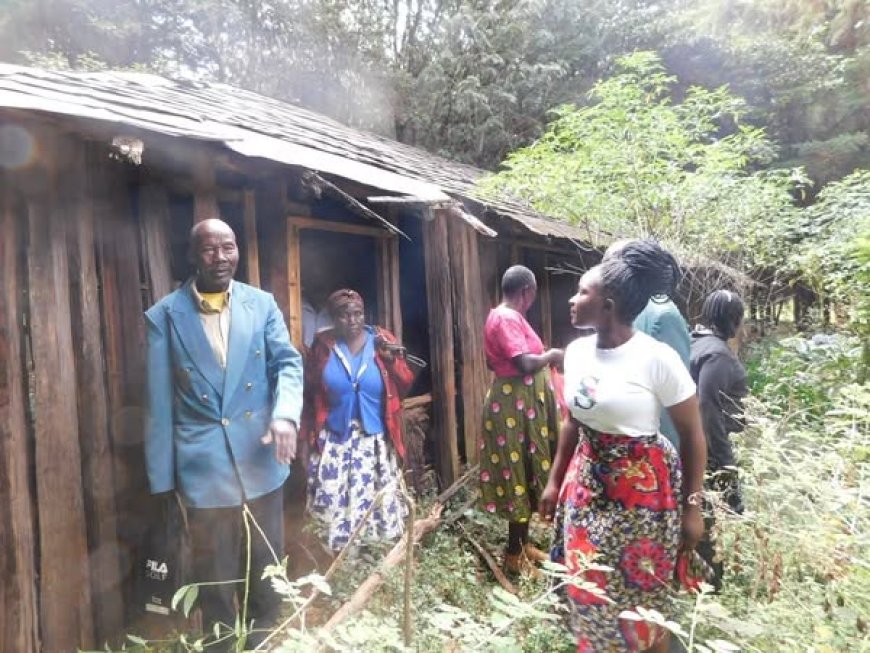
Engulfed in the humid, sweet scent of moss and decomposing forest leaves, the oldest and only existing colonial-era AIC church stands in defiance of time and the elements.
The foundation of the Sabatia AIC church was established at the beginning of the Second World War in 1939.
An encounter with this past leaves one struggling to decipher how those early believers loved God, dedicating their time and resources to a faith associated with a white oppressor believed to be on a mission to vanquish all traces of Africanism.
Yet, this little church in the wildwood remains a true reminder and embodiment of the history that brought light to the natives of Baringo County during the noon of colonialism in Kenya.
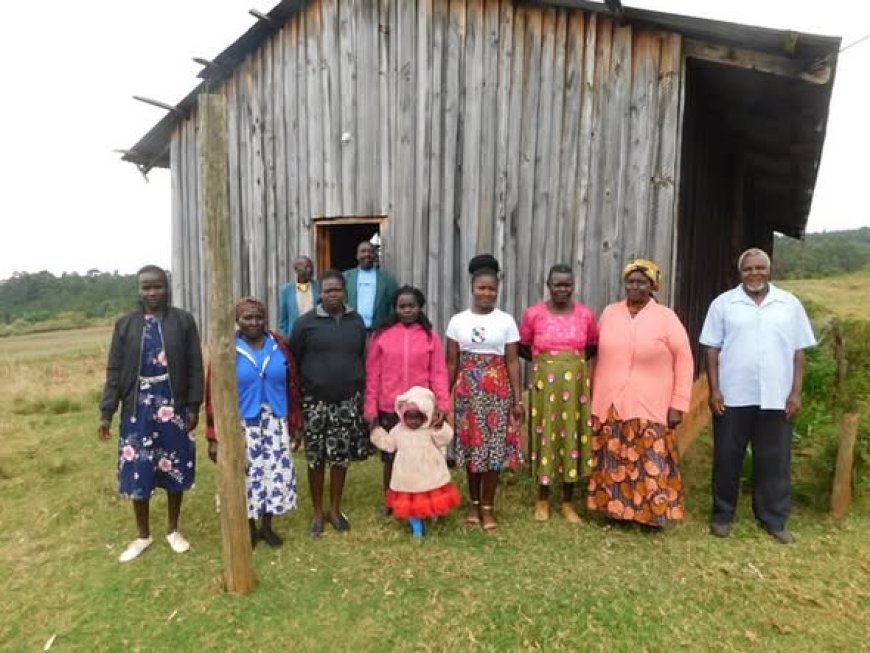
According to Isaac Kottut, the current AIC church leader in Sabatia, the first and oldest AIC church in Baringo County was originally built near Kabimoi-Kipkaber village by the Barnetts.
However, that mission center was set on fire by the Lembus during their fierce resistance against oppressive British rule.
For safety reasons, the AIC missionaries moved to the Eldama Ravine colonial center to establish a mission station, and later relocated to Kabarnet.
“African Inland Church worshippers in Sabatia have been meeting here from 1939 until 2010, when the Kenya Forest Service asked us to relocate to a new building near Sabatia Forest Station.
It served us for 71 good years,” Isaac Kottutt told Rural Times, sending out an appeal to all forest stakeholders in Baringo County, including the fiery Lembus Council of Elders, to submit their input on how best to preserve this historical structure.
Who Were the Founders? According to the chairman of the current AIC church in Sabatia, Johanna Sergon—who left his Kipsaraman home in Baringo North back in 1964—the church founders passed away long ago, but their names remain written in the hearts of the Sabatia people, who frequently share the story with their children.
Tirus Kongoine, credited for serving as an evangelist who took the gospel all the way to Tenges, tops the list of founders. He was assisted by Stephen Kinoo, Chege Kangeri (who served as a local forest guard), and Elisaphan Njoroge.
All of them were members of the Kikuyu community, and their descendants currently reside in Kamara and parts of Visoi in Rongai Constituency.
“The church made of timber was initially thatched with grass starting in 1939, but in 1966, the worshippers managed to gather barrels of cooking oil [sheets] as roofing material, which still exist to date. In 1973, the faithful pooled resources to cement the church floor,” Kottut revealed to Rural Times.
Accompanied by church elder Patrick Wekesa, an immigrant from Western Kenya, Wekesa notes that the name Sabatia originates from an old man named Magoha, who settled in the region while working for the Lunatic Express, the colonial-era East African Railway.
Stationed in modern-day Sabatia, Magoha often spoke of his origins in Sabatia, Western Kenya, leading the locals to adopt the name. A Changing Cultural Landscape Before the arrival of Christianity, Africans cherished a culture of polygamy, a tradition that helped prevent a sister or daughter from living alone and becoming vulnerable or marginalized.
Offspring from such unions were sometimes treated as second-class members of society, barred from participating in sacred community rituals like praying for rain.
No African family wanted their descendants to carry that social stigma, which could render them unsuitable for leadership roles, marriage, or blessing the younger generation.
In that traditional world, every child had a father, and childbearing outside of marriage was not only an abomination but heavily frowned upon.
Young widows were inherited to safeguard their dignity and respect. The Broader History of the AIC The Africa Inland Church in Kenya has about 2.4 million followers.
The church began its work in Kenya in 1895 under its founder, Peter Cameron Scott, establishing its initial base among the Kamba people in present-day Eastern Province.
Peter Cameron Scott, a Scottish-American missionary born in Scotland in 1867, decided to spread the message of Jesus Christ after the tragic death of his sister.
That loss profoundly impacted him, making him realize that human life on earth is fleeting and finds true meaning only when surrendered and reconciled to Jesus Christ.
After suffering from Blackwater fever, Scott died at the tender age of 29 and was buried in Nairobi South Cemetery.
He was originally buried in Nzawi, Machakos County, but was later exhumed and reburied in Nairobi.
Although British colonialism in Kenya is often viewed through a negative lens, the old church in Sabatia stands as a testament that all was not lost.
The light of truth continues to shine, inviting Christians to pay a pilgrimage to the old church and understand the immense sacrifices early believers made to know Jesus Christ.
What's Your Reaction?