















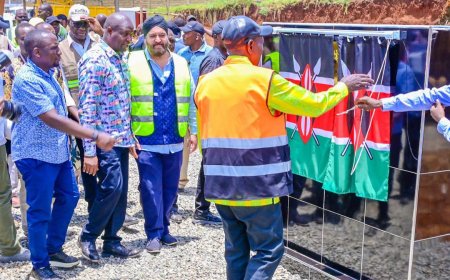





KSB Cracks Whip on Millers Over Delayed Payment, Weighbridge Fraud
As an immediate intervention to cut on the importation, Kenya has started refining imported raw sugar locally instead of relying entirely on finished refined sugar.


BY Wakhungu Andaje
Sugar cane farmers will be protected from miller exploitation, Kenyan government cracks whip on delayed payments and weighbridge tonnage fraud.
It is now an order from government through the Kenya sugar board (KSB) that sugar millers will have seven days to pay farmers after delivery of sugarcane or face penalties, including interest on delayed payments.
The enforcement is an act by government which has launched a tougher enforcement regime to protect cane growers from exploitation and put more money into their pockets.
In a statement released by the Kenya Sugar Board (KSB) reads “ The days when farmers used to wait indefinitely for payment after delivering cane must come to an end, with contracts now providing clear sanctions against millers who violate the standard seven-day payment period”.
The Kenya sugar board (KSB) chief executive officer (C.E.O) Jude Chesire said they were also working out to address the much cried about weighbridge theft by the millers.
“As regulators we are seriously and simultaneously moving against weighbridge malpractices that have seen some farmers lose up to three tons of cane per trailer, effectively denying growers their hard earned payment for cane they have produced, harvested and transported.
He announced that the regulator as a way of constituting and streamlining the sector to the benefit of the grower, it was scouting for mobile weighbridges to double check the cane tonnage.
“KSB is procuring mobile weighbridges to independently verify cane weights and strengthen enforcement and also we hail the government for investing in cane-testing units as the sugar industry moves towards a payment system that considers quality and sugar content rather than relying only on weight.”
At the same time, KSB has directed millers to establish a clear and transparent cane harvesting frameworks by 10th September 2026, as government seeks to streamline harvesting, transportation and delivery to end delays that leave mature cane deteriorating in farms at the expense of the growers.
These tough farmer-protection measures come on board as Kenya's sugar industry records a significant production recovery where domestic sugar production clocked 815,454 metric tons (MT) in 2024, being the highest level in recent years.
Kenya produced 611,576 MT in 2025, with production between January and July 2026 standing at 528,875 MT. In recent months the recovery accelerated sharply with production reaching 89,709 MT in June and a record 91,022 MT in July 2026 respectively.
Despite the improvement, Kenya remains a sugar-deficit country as its annual demand standing at approximately 1.2 million MT, comprising about 1 million MT of brown/table sugar and 200,000 MT of white refined sugar for industrial use as its national sugar consumption reached approximately 1.216 million MT in 2025.
The deficit continues to be bridged through imports mainly from the COMESA and EAC regions. Kenya imported 477,551 MT of sugar in 2025, while another 65,081MT of brown sugar was imported between January and July 2026.
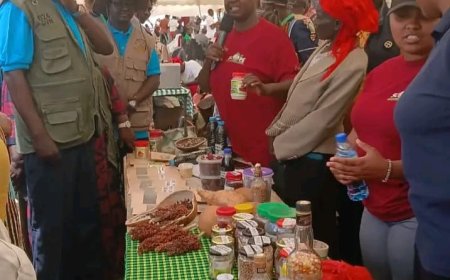
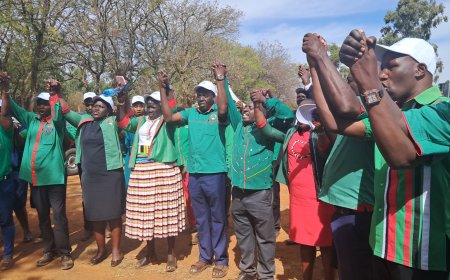
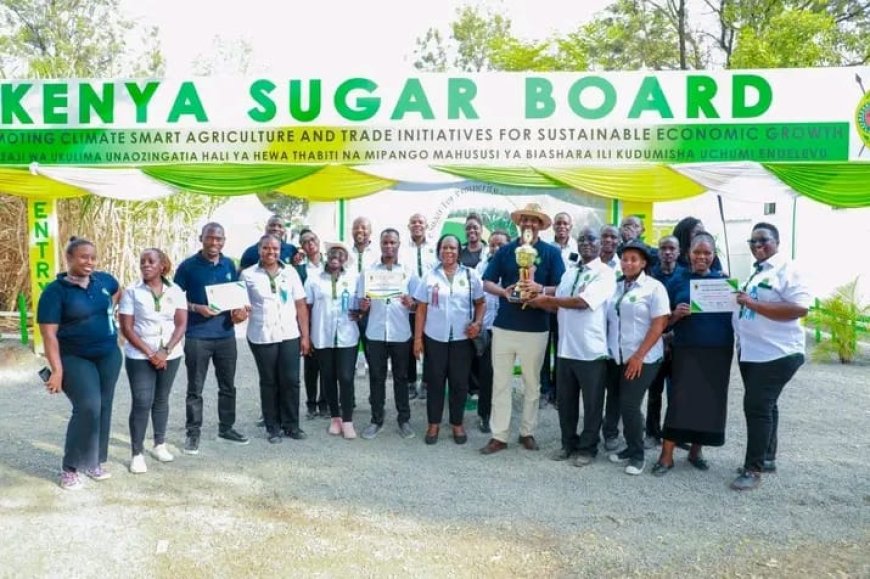 Staff of KSB displaying their trophy they won at the recent Kakamega ASK show.
With the country (Kenya) spending Ksh.30Billion annually to import white refined, it has become a huge concern as the government works out on how it can retain the cash sugar to boost its economy through its expansion of sugarcane production and developing its own refining capacity.
As an immediate intervention to cut on the importation, Kenya has started refining imported raw sugar locally instead of relying entirely on finished refined sugar.
At Mombasa sugar refinery limited, with an installed refining capacity of about 150,000 MT annually, it has imported 27,839 MT of raw sugar and has commenced local refining.
According to Kenya sugar board management, strict safeguards have been established to ensure and curb the raw sugar leaking into the table-sugar market before being refined as the long-term target being the growing of more sugar cane within the country.
Also the ministry of agriculture and livestock development through KSB is pushing for increased cane acreage and productivity, better milling efficiency, value addition and expanded domestic refining capacity to progressively reduce the country's dependence on imports.
What's Your Reaction?