




























ADVISORY FROM KERICHO DAIRY CO-OPERATIVE UNION LTD WHERE IS THE MILK? — A SIMPLE MESSAGE TO KENYAN DAIRY FARMERS
The Problem Is Not Simply Lack of Cows Kenya has many dairy cows, but having more cows does not automatically mean having more milk.

The Big Question: Where Is the Milk?
Today, many Kenyans are asking: “Where is the milk?” Consumers need milk.
Processors need milk. The Government needs milk. Most importantly, farmers need a dairy business that gives them good and reliable income.
At the same time, some neighbouring countries are producing more milk than they can sell.
This shows that Kenya has an opportunity to improve its dairy industry.
The current milk shortage should not only be blamed on drought. It is a warning that our dairy system needs to change.
The Problem Is Not Simply Lack of Cows Kenya has many dairy cows, but having more cows does not automatically mean having more milk.
The real question is: How much milk does each cow produce, and how much does it cost the farmer to produce one litre?
A farmer with fewer cows producing more milk profitably can do better than a farmer keeping many cows that produce very little.
What Farmers Should Concentrate on: We need to move from “more cows” to “better cows and better management.”
Farmers should focus on: Better cows and good breeds that can produce more milk. Enough good feed throughout the year, not only when rain is available.
Growing and storing fodder such as maize silage, hay and other suitable feeds. Clean and adequate water, especially during dry seasons.
Minerals and proper nutrition to keep cows healthy and productive. Good breeding and timely artificial insemination.
Keeping simple farm records—milk produced, feed used, breeding, diseases and costs. Controlling diseases and reducing cow deaths. Reducing the period between one calf and the next. Knowing the cost of producing one litre of milk.
A Simple Message About Profit Farmers should not only ask: “How many litres did my cow produce?” They should also ask: “How much did I spend to produce those litres, and how much money remained in my pocket?”
For example, if a cow produces 20 litres but consumes very expensive feed, the farmer may earn less than another farmer whose cow produces 15 litres at a much lower cost. Milk production must be measured together with profit.
Suggested National Solution Kericho Dairy Co-operative Union recommends that Kenya develop a National Dairy Productivity Strategy.
The strategy should bring together: Government Dairy co-operatives Processors Farmers Feed manufacturers Banks and SACCOs Research institutions Animal health professionals Kenya Dairy Board and other relevant agencies.
The Government should establish a simple national dairy monitoring system to regularly check: Milk produced per cow per day. Cost of producing one litre. Cost of feed. Availability of fodder.
Availability of water. Milk quality. Cow health and fertility. Number of calves produced. Cow deaths. Milk received by processors. Price paid to farmers. Farmer's profit per litre.
This information will help the country identify problems before a serious milk shortage occurs. 6. What Should Be Done During Drought? Drought preparedness should become a normal part of dairy farming.
Farmers should: Plant fodder when rains come. Make and store silage and hay. Keep fodder reserves for dry months. Harvest and store water where possible. Avoid keeping animals that cannot be properly fed.
Work through co-operatives to access affordable feeds and services. Government and co-operatives should: Support affordable fodder production. Establish strategic fodder reserves in dairy areas.
Support water development. Improve extension services. Make affordable finance available for dairy productivity. Support farmers with training, breeding and animal health services.
The opportunity is, Kenya has the ability to produce much more milk. The challenge is to produce it efficiently, profitably and throughout the year.
Therefore, the present milk shortage should be treated as an economic warning and an opportunity to improve, not simply as a temporary drought problem.
Kericho Dairy Co-operative Union's Key Message: The solution is not simply more cows. We need better cows, better feeding, better fodder, better water, better breeding, better records, better animal health, better markets and better decisions.
If every farmer can produce more milk from every healthy cow at a lower cost, Kenya can reduce milk shortages, increase farmers' incomes, supply processors consistently and compete successfully with other countries.
Our Call to Farmers Let us stop asking only, “How many cows do I have?” Let us begin asking: “How much milk does each cow give me?” “How much does one litre cost me?” “How much profit do I make?” “What will I feed my cows when the rains fail?”
A profitable cow is better than an expensive cow. A well-fed cow is better than a hungry cow.
A prepared farmer is better than a farmer waiting for drought. And a united co-operative is stronger than an individual farmer working alone.
The Kericho Dairy cooperative Union is focusing on farmers running the whole milk value chain from farm to selves.
Farm production ( Breeding, Genetics, feeding, training, quality milk,) Society aggregation, Chilling, Processing at farmers own factory and marketing.
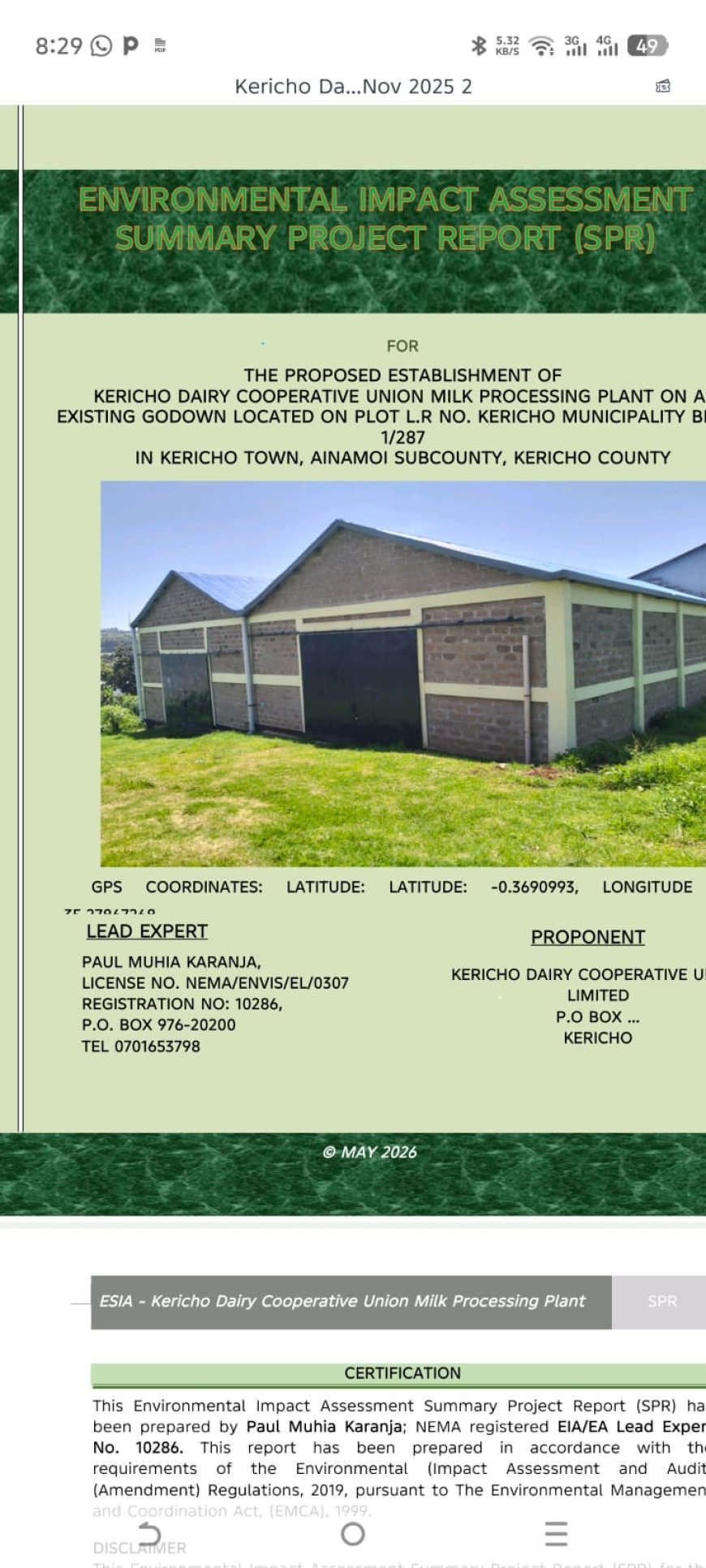
This will end blame games. Kericho Dairy Cooperative Union is now establishing a processing plant at the center of farmers.
Kericho Town Advisory: KERICHO DAIRY CO-OPERATIVE UNION LTD. From Moses Rotich -Deputy Chair Kenya Dairy Co-operative Union National
What's Your Reaction?