

















No Solution on Climate Change Challenges as COP31 Wraps up
For communities already bearing the devastating costs of climate change, this is another painful reminder of the gap between political promises and the action needed on the ground.

By Wakhungu Andaje/ Antalya Turkey
Delegates attending the 31st Conference of the Parties (COP31) in Antalya, Türkiye, have returned to their respective home countries without finding a solution to the pressing global challenges.
The delegates including world leaders, policymakers and climate experts have failed to get a solution despite the conference holding meaningful conversations on climate change, environmental sustainability, climate resilience and international cooperation.
Despite many countries being among the most vulnerable to climate change, and having believed in collective efforts, meaningful partnerships and practical solutions to secure a sustainable future for coming generations at the conference, no tangible and workable solution was reached despite their committed to represent their perspective and contributions to the global dialogue on climate action.
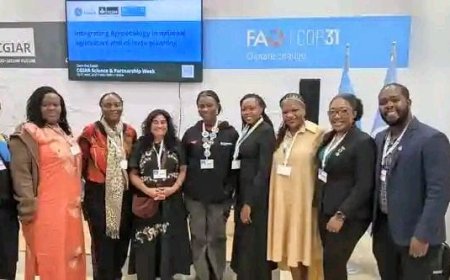
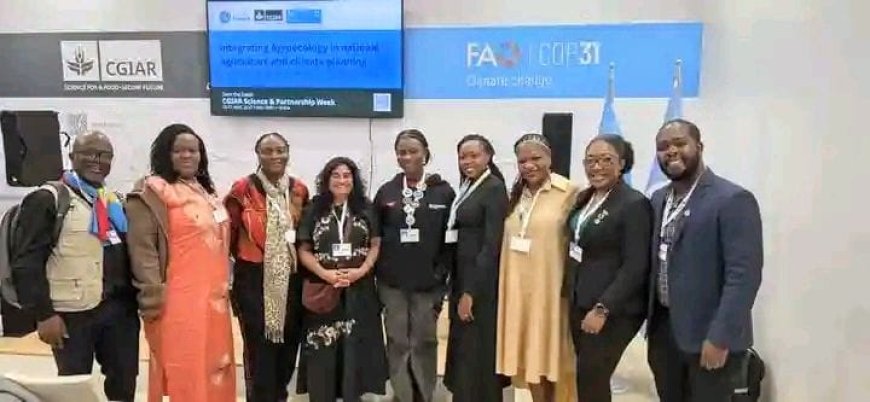
Delegates attending the just ended COP 31 conference in Antalya from Kenya were not left behind in also expressing their disappointment and Karen Samukoya Mutaki Nekessa, chair of the Alliance for food sovereignty in Africa (AFSA)'s Climate and Agroecology Working Group is one of them.
 Karen Nekessa chair of AFSA's Climate and Agroecology working group
“I left Antalya disappointed! After weeks of engagement,(9TH -20TH November) difficult negotiations and high expectations, the outcome of COP31 is far from what vulnerable communities, particularly Africa’s smallholder farmers, indigenous peoples, pastoralists and fisher folks deserve”.
She said it was deeply frustrating that after long hours of overtime negotiations, the proposed Antalya pact at the summit was rejected, leaving there without an overarching political agreement.
For communities already bearing the devastating costs of climate change, this is another painful reminder of the gap between political promises and the action needed on the ground.
“As a country, we came to Antalya demanding climate finance, meaningful adaptation commitments, a just transition that protects livelihoods and recognition of agroecology as a pathway to resilient and sustainable food systems and mac you these are not luxuries or negotiating favours, but matters of justice, survival and dignity.”
AFSA has further expressed concerns that Africa could not afford another cycle of empty promises with its farmers no longer waiting for political consensus while droughts, floods, rising temperatures and food insecurity continue to threaten their livelihoods.
Despite (AFSA) being disappointed by the outcome, it remains convinced that walkingt away from an inadequate agreement is better than accepting a deal that compromises the interests of vulnerable communities and are optimistic that COP 32 in Addis Ababa Ethiopia will and must deliver both climate justice and action.
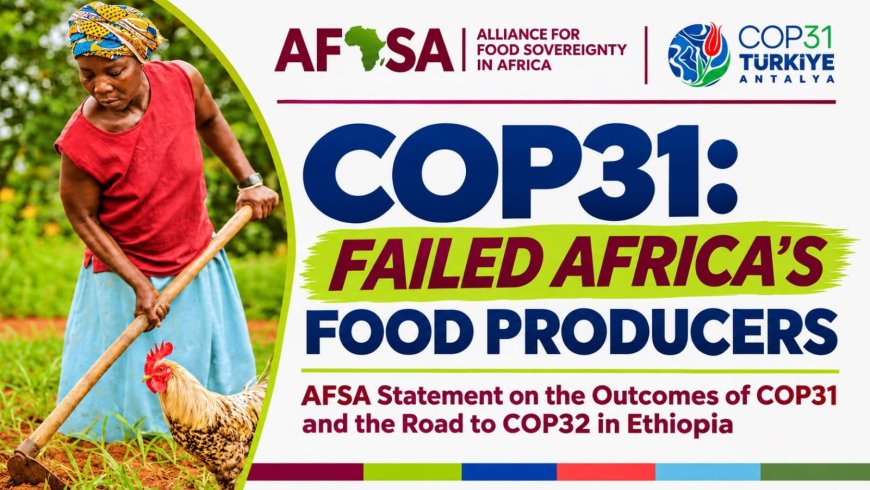
“The Alliance for Food Sovereignty in Africa (AFSA) expresses profound disappointment with the outcome of COP31 in Antalya, Türkiye as it was a session presented as an opportunity to move from commitments to implementation for us but it is unfortunate that it wrapped up with deep divisions, inadequate progress on climate finance and critical decisions deferred.”
Worse of the outcome was the failure to reach a substantive agreement on the future of agriculture and food security under the United Nations framework convention on climate change (UNFCCC). It is worth noting that after nine years of discussions under the Koronivia and Sharm el-Sheikh work programmes, negotiations again stalled. Rather than adopting a funded implementation framework, AFSA has noted that COP31 deferred further consideration to 2027.
The nongovernmental organization which advocates for food security, cushions farmers against GMO’s, while promoting small scale and indigenous farming practices continued to poke holes in the flaws of COP 31 stating that workshops, reports and dialogue alone cannot substitute for decisions that deliver resources to the continents farmers producing food.
It insisted that already Agroecology was in place and delivering solutions for climate resilience, biodiversity and food sovereignty the political courage to recognize, finance and scale up these solutions being the only bottleneck.
At the COP31 conference, clarity and commitments necessary to deliver on the promise to triple adaptation finance by 2035 were not also provided hence no credible financing baseline or sufficiently accountable delivery pathway emerged.
It pointed out that although some institutional outcomes provide opportunities for further engagement, the operational arrangements of the Just Transition Mechanism remain unresolved and that Climate finance must be new, additional, predictable and predominantly grant-based, reaching frontline communities directly without creating further debt burdens.
AFSA is keenly banking on the COP32 in Addis Ababa, Ethiopia, as a significant opportunity to place Africa’s priorities at the centre of global climate negotiations. And it is here that it is calling for a concrete, time-bound and financed decision on agriculture and food systems, an accountable pathway for tripling adaptation finance, direct access to grants for frontline communities, and a just transition that protects the rights and livelihoods of farmers, pastoralists, fisherfolk, women, youth and Indigenous Peoples.
“Africa cannot afford another lost COP, and the farmers who feed the continent deserve more than recognition, sympathy and promises, they are entitled to justice, resources and a decisive role in shaping their future. No more delays. No more empty commitments. It is time to deliver”. As we look towards COP32 in Addis Ababa, Ethiopia, in 2027, Africa must turn this disappointment into collective resolve.
We need stronger continental solidarity, domestic resource mobilisation and a united voice demanding accessible, grant-based climate finance, adaptation support and a just transition rooted in people's realities.
Africa must not only host the next climate COP. It must help shape an outcome that delivers justice, accountability and meaningful action.
Climate justice cannot remain a promise on negotiating tables. It must translate into change in the lives of the people on the frontlines of the climate crisis.
AFSA left Antalya disappointed but not defeated and Addis will be the turning point for Africa.
What's Your Reaction?