


























CJ Koome Praises Late Supreme Court Judge Ibrahim Mohammed as a Trailblazer
Sources said the legal mind was due to proceed on terminal leave ahead of his mandatory retirement in January 2026.

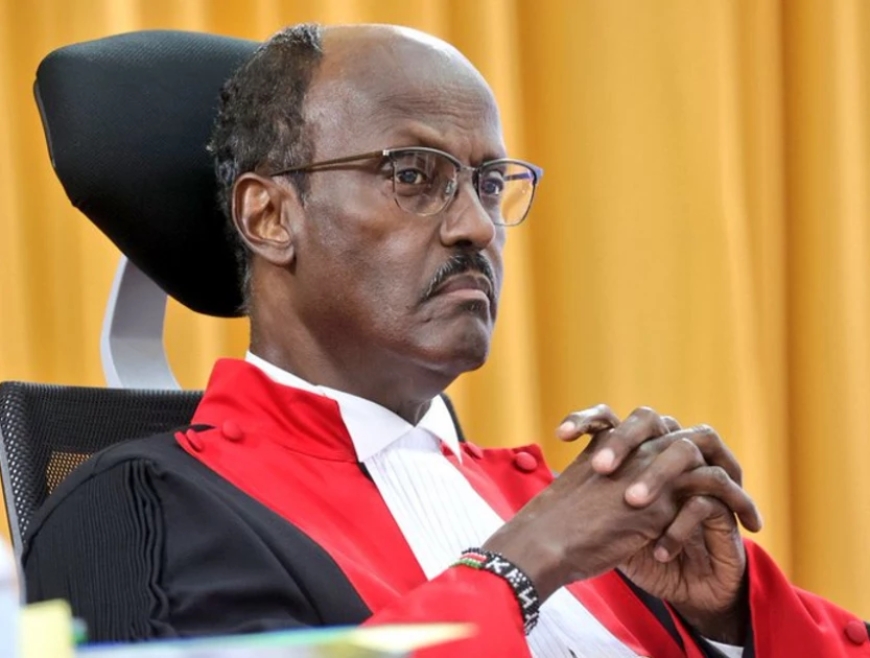
Supreme Court Judge Ibrahim Mohammed passes on at 69 after a short illness Wednesday afternoon, minutes past 4p.m.
The late judge was the first member of Kenya’s Somali community to be posted as an Advocate of the High Court of Kenya back in 1982.
He was deeply engaged in public interest litigation and civic advocacy including work with Kituo cha Sheria and the Lawyers Committee for Human Rights.
Sources said the legal mind was due to proceed on terminal leave ahead of his mandatory retirement in January 2026.
He had a distinguished 23-year judicial career marked by institutional reform, jurisprudential leadership and a legacy of advancing access to justice.
He leaves behind a wife and four children. Chief Justice Martha Koome confirmed the death of the judge, describing Justice Ibrahim as “a steadfast guardian of constitutionalism, electoral justice, and human dignity.”
She recalled his journey in the corridors of justice before joining the Bench, saying Justice Ibrahim had already distinguished himself as a trailblazing advocate, human rights defender, and public-spirited lawyer.
During Kenya’s struggle for multiparty democracy in the late 1980s and early 1990s, Justice Ibrahim provided legal support to activists and marginalised communities, an advocacy that led to his detention without trial.
His experience shaped his lifelong devotion to constitutionalism, the rule of law, and the protection of human dignity.
Justice Ibrahim joined the Judiciary in 2003 as a High Court judge and was elevated to the Supreme Court in 2011, serving on the inaugural bench responsible for implementing Kenya’s transformative 2010 Constitution.
He also served as Chairperson of the Judiciary Committee on Elections and as the Supreme Court’s representative to the Judicial Service Commission, where he consistently championed transparency, integrity, and judicial independence.
Koome, in her message, noted that Justice Ibrahim “served as a collegial judge, a quiet mentor, and a firm believer in principles over prominence”, adding that his life exemplified fidelity to his oath of office, service to country, and compassion for the voiceless.
The Judiciary, the Supreme Court, and the JSC have also expressed profound sorrow at his passing and extended their condolences to his family, friends, colleagues, and the wider legal community.
What's Your Reaction?