



















Highly Contagious Foot and Mouth Outbreak Hits Kerio Valley
The infectious disease targets unvaccinated herds in Kerio sides of Baringo and Elgeyo-Marakwet counties.


By Dorothy Yegon
Uproar as an outbreak of Foot and Mouth Disease (FMD) hit unvaccinated livestock along Kerio Valley, border of Baringo and Elgeyo Marakwet counties.
According to authorities, animals which were vaccinated six months ago are safe while those whose farmers did not present them for vaccination are now falling sick.
"The illness started three weeks ago in Kerio wards of Arror, Emsoo, and some parts of Tambach" Dr. Joseph Kiyeng, Elgeyo-Marakwet County Director for Veterinary Services said Friday.
He said the county conducted a vaccination campaign six months ago, but some farmers did not bring their cows for vaccination — and it is those unvaccinated animals that are now affected.
"The cattle which were vaccinated six months ago are safe. The ones that were not vaccinated are the ones affected and not safe," Dr. Kiyeng said.
He said no deaths have been confirmed in Elgeyo Marakwet so far but the county livestock department has imposed quarantine to restrict animal movement.
"With vigilance required for two weeks before infected animals can be vaccinated. There is no nursing treatment being administered to boost immunity in affected animals" he said.
Kiyeng further disclosed that FMD is a viral disease with no specific cure — management relies on containment and prevention through vaccination.
Following the outbreak, Biretwo livestock market has been closed indefinitely for one month to contain the spread. Across the county border in Baringo, farmers are reporting the same disease with classic FMD symptoms.
Desmond Rotich, a farmer in Lake Kamnarok, Baringo County, told Rural Times that his cows exhibited high body temperatures, excessive salivation with water continuously dripping from the mouth.
"Visible wounds around the mouth and legs, and protrusion of the tongue throughout the day. The affected animals also developed lameness and stopped eating entirely" he said.
Rotich also says his cows showed signs of high temperatures, had their tongues outside all day, and foaming watery saliva from the mouth.
There were wounds around the mouth and legs.
After some time, the cow could limp, and may not eat anything. Dr. Esmond Kiptum, the County Director for Veterinary Services Baringo, confirmed that the disease is viral and explained how it spreads through the region's pastoral system.

A visibly sick calf taking a rest in Kerio Valley
He said because the disease is viral it spreads at watering points and market places and along the routes the cows travel.
"When cows interact at water points or market centres, they exchange the disease and go home to infect those that have not gone to congested places," Kiptum said.
He said the decision to ban livestock markets was taken to contain the disease and prevent further transmission through animal contact at shared trading points.
The markets of Barwessa and Kaptara in Baringo have also been closed indefinitely.
Elgeyo Marakwet farmer Oliver Kangogo said the disease was reported approximately two weeks ago in the upper areas of Emsea, Kipcheptem, and Kapkayo areas.
He said no cases of death have since been recorded in Elgeyo Marakwet.
The fact that vaccinated animals are safe while unvaccinated animals are falling sick is the clearest confirmation yet that the outbreak was preventable — and the gap in vaccination coverage, not the virus alone, is what has allowed the disease to surge.
The national government has allocated KES 37 billion over the last five years for a vaccination programme targeting approximately 22 million animals across the country, with a goal of reaching 80 per cent vaccination coverage.
The vaccine is subsidised at KES 50 per animal. However, the Principal Secretary for the State Department of Livestock, Jonathan Mueke, has previously acknowledged that FMD control efforts face significant challenges, including uncontrolled animal movements, failure to respect quarantine requirements, and low vaccination coverage that leaves the majority of animals susceptible.
The current outbreak in Baringo and Elgeyo Marakwet is a direct illustration of those challenges. Vaccines were available six months ago.
Some farmers brought their animals. Others did not.
The ones who did not are now watching their cattle suffer — and the disease has spread from those unvaccinated herds to other animals at shared water points and market routes, including to cows that stayed at home and never went to market.
For pastoralist households in the Kerio Valley, who depend on livestock for food, income, school fees, and survival, the cost of skipping vaccination has proven far higher than the cost of the subsidised vaccine.
An unvaccinated cow that contracts FMD may lose condition for weeks, stop producing milk, and in severe cases die — losses that can run into thousands of shillings per animal.

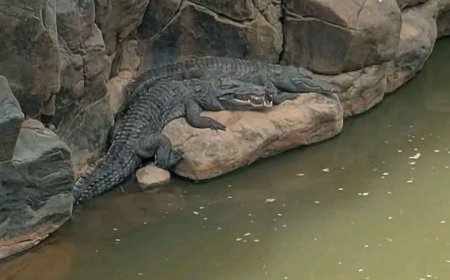
Cows drinking water at Kerio River, Border of Baringo and Elgeyo-Marakwet Counties.
The closure of livestock markets at Barwessa, Kaptara, and Biretwo means that even farmers with healthy animals can not sell them, cutting off household income during an already difficult season marked by drought and environmental degradation.
Veterinary authorities in both counties are urging farmers to cooperate with quarantine measures, report any suspected cases immediately, and ensure their animals are vaccinated when campaigns reach their areas.
Dr. Kiyeng said that after two weeks of vigilance, infected animals in Elgeyo Marakwet will be assessed for vaccination — a critical step toward rebuilding immunity in the herds that were left unprotected.
The message from both county veterinary departments is clear, and the same vaccination works. The cows that were vaccinated are safe.
The ones that were not are sick. The farmers who heeded the call six months ago protected their herds.
While those who did not are now bearing the consequences — and so are their neighbours.
As the vaccination campaign resumes across Baringo and Elgeyo Marakwet, the hope is that this outbreak will be the lesson that closes the vaccination gap for good.
However, farmers along Kerio Valley, where livestock is wealth and survival, a vaccination as low as Ksh50 should breach the gap between their healthy herd and dying ones.
Dorothy Yegon is a journalist and founder of Greenlife Restoration Initiative, a Community Based Organization(CBO) based in Kerio Valley, Baringo-Elgeyo-Marakwet Counties.
What's Your Reaction?