












Know Your Rights PLWDs Urged
PLWD’s who have not registered urged to do so to be captured in the government database.

By Wakhungu Andaje
Many of the disabled persons in Kenya barely know their constitutional rights as stipulated in the 2010 constitution.
This has led to many of them being abused, neglected and denied their rights as per the bill of rights in the constitution.
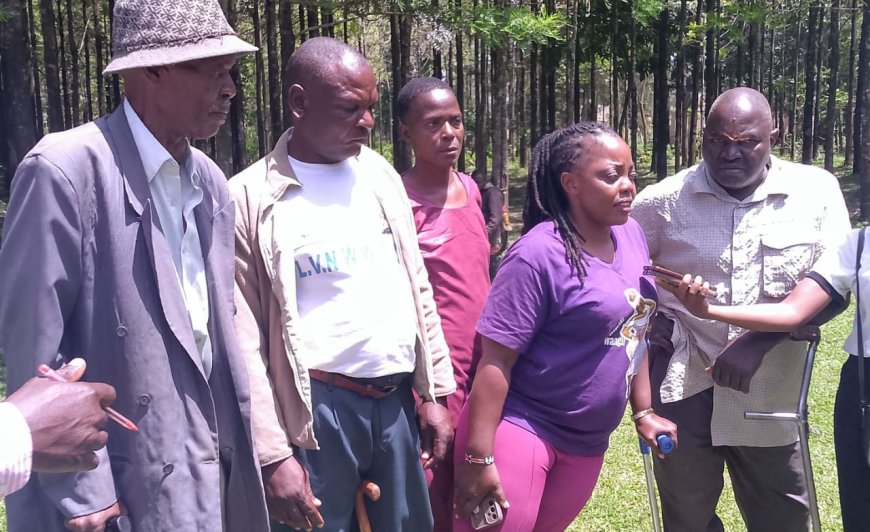
The Secretary General of the Kakamega County Disability caucus Catherine Namayi Shiundu, who also acts as the coordinator and facilitator for trust for indigenous culture and health (TICAH) while educating youth with disabilities in Malava on their constitutional rights ahead of the coming by election (27th November 2025) said it was important for them to not only know but understand what the constitution entails especially for them (PLWD’s) so as to help make sound and rightful decisions.
She quoted article 1 of the 2010 constitution that states “the sovereignty power belongs to the people” assuring them that despite their conditions, they were also entitled to those fundamental rights like any other human being including among others health, education, right to elect (vote) and should exercise them fully.
The education training which was sponsored by the trust for indigenous culture and health (TICAH) a non-governmental organization (NGO) based in Nairobi and operating within several counties with Kakamega being among them was the third in a row to empower PLWD’s across the county.
The secretary general lauded the organization commitment in educating the disabled groups noting that it was one way of exposing them to the right and true information to assist them uplift themselves.
“TICAH has been on the fore front in highlighting critical issues affecting our people and we started by educating them about reproductive health, human rights and now the constitution especially here in Malava as they are about to hold a by election this end month and the outcome has been awesome as many have admitted not to have known their constitutional rights at all” she stated.
She pointed out that the 2010 constitution has clauses that favour the disabled persons if implemented will assist them achieve their many goals they’ve yearned for years.
At the same time she hinted that currently the constitution was only serving few individuals personal interests leaving the disabled out.
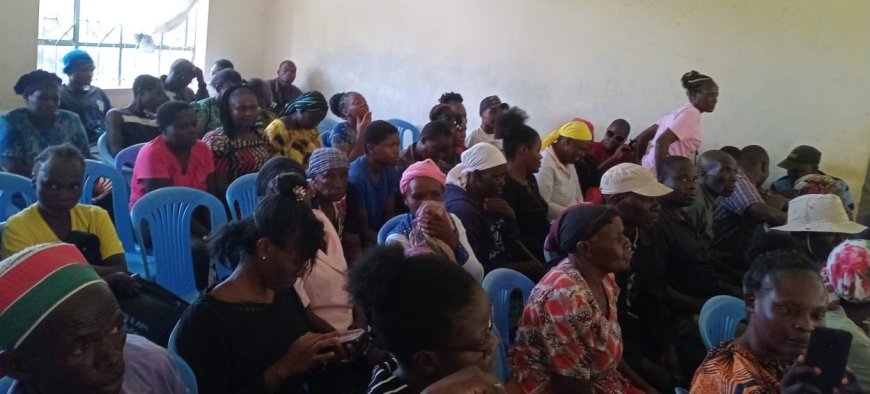
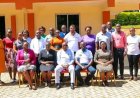
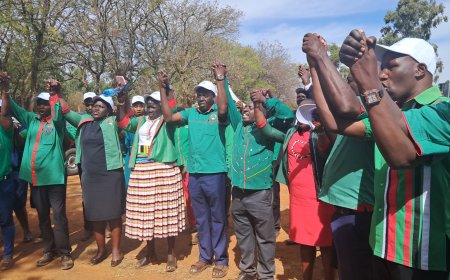
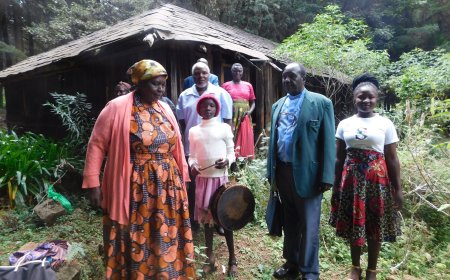
Some of the attendees at the TICAH workshop in Malava, Kakamega County
“Our 2010 constitution is yet to be fully implemented to our advantage and once it has done so and exceeded its usefulness then we can advocate for its changing to a new one but for now it still remains to be the best constitution in both the East and Central Africa as it entails so many good clauses to assist us”, she said.
Shiundu also lauded the new disability act 2025 which replaces the 2003 as falling in place with the 2010 constitution one tailored to empower the (PLWD’s).
She poked holes at the now scrapped disability act 2003 as having a lot of loopholes that did not favour them as far as getting vital services was concerned.
“We are happy to be part of the 2025 disability act as it is crafted to benefit each of the registered (PLWD’s) and through organizations like (TICAH), we will push for its implementation of our 5% space in both county and national governments respectively” she paused.
She added that unlike in the past acts which had passed and shelved their laws to their disadvantage, the 2025 act was shedding more light to their issues and it was awake up call for them to push for its realization through advocacy, civic education, raising of their voices and through community actions.
Shiundu insisted on the need for the youth (PLWD’s) to be taught their rights through (TICAH) initiative stating that article 54 of the constitution chapter 4 addressed their bill of rights.
“Trust for indigenous culture and health (TICAH) organization felt it right for us to come to the grass root level to educate our youth about their right especially on the constitution and bill of rights so as to enable them stand up for themselves” she assured.
At the same time, she called on those PLWD’s who have not registered to do so to be captured in the government database.
“The government has made free the registration process as well as medical assessment which can be conducted from level four and above health facilities allover within the county.
Also the medical report has been made free and can be signed locally at the county level with the forms being downloaded via a smart phone or in the cybercafé.”
To crown it all she added, the certificate results can be relayed within 24 hours upon application thanks to the technological innovation for easing the tedious process by digitizing the certificate registration process locally for us as it is now cost friendly.
During the TICAH workshop, over 200 youth were educated about the constitution, scholarships for the PLWD’s, accessing government benefits, medical cover (SHA) among others.
She however took an issue with the county government of Kakamega for failing to implement its disability act 2022 with only 20% to cover their budget inclusion, public participation.
“We are yet to see the county disability bill serve us effectively and it has been three years since it was effected and we are not even recording a 5 % PLWD’s requirement hence we are still depending on various ministries to finance us but the little monies they allocate to us are usually redirected during the supplementary budget reading to cater for other activities”, she concluded.
What's Your Reaction?