
















PCS Mudavadi Condemns Ongoing Goonism in Kenya at AMECEA Conference
He highlighted the need to embrace peace and security within the region as conflicts within African continent continues to thrive and claim many lives.

By Wakhungu Andaje
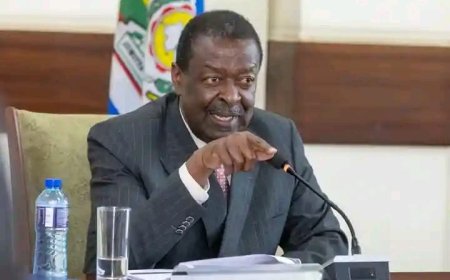
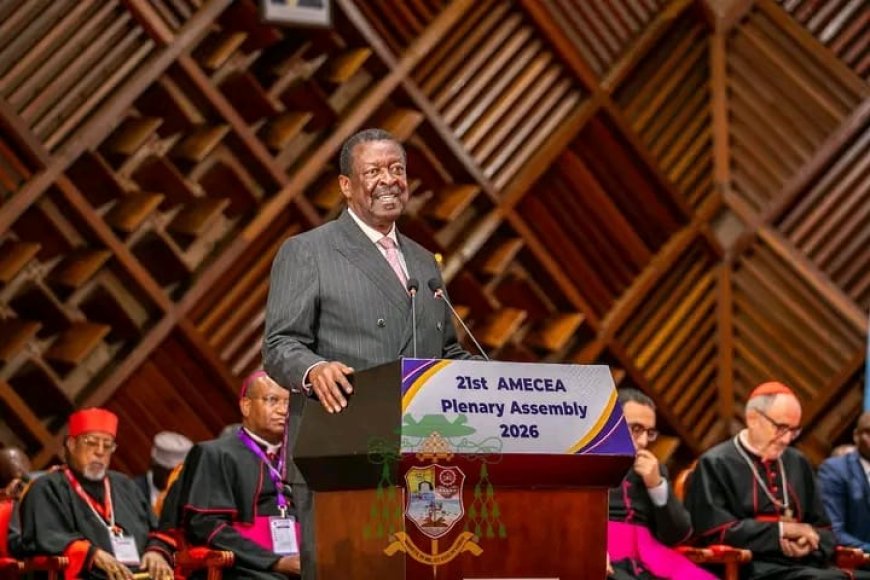
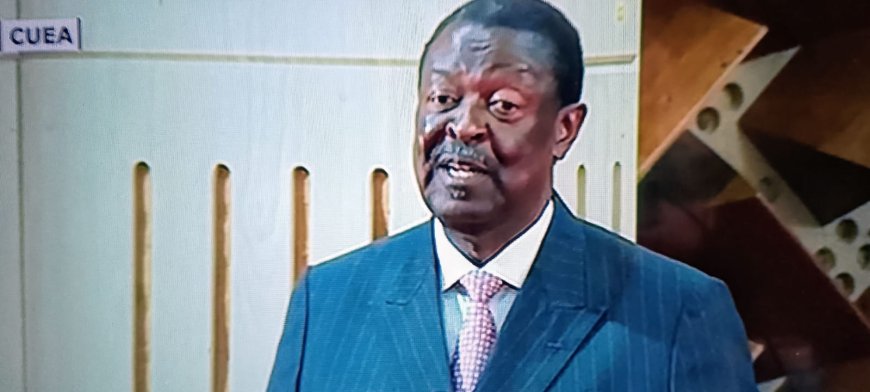
Kenya’s Prime cabinet secretary and minster for foreign affairs Musalia Mudavadi has condemned the ravaging acts of goonism in the country calling on stringent measures against the perpetrators.
Mudavadi has warned that if swift actions are not taken by the security apparatus, Kenya risks sliding back to the 20007 -2008 post-election violence that saw 1400 young people lose their lives from gunshots and acts of goonism.
Musalia who was representing President William Ruto at the 21st association of member episcopal conference in East Africa (AMECEA) plenary assembly, he called on the young people to desist from being lured by money to cause havoc and mayhem in the country especially during election period and instead invest positively in ensuring that peace prevails within the country.
He highlighted the need to embrace peace and security within the region as conflicts within African continent continues to thrive and claim many lives. He said that through war in the horn of Africa over 20 Million families have been displaced with a further 118Million children out of school due to conflict and climate change emergencies according to the UN report of June 2026.
“In Sudan alone according to the united hum
an rights commission (UNHRC) report,14Million people have been mass displaced since 2023 when war erupted and half of the schools within the country are not operational forcing 13Million children out of school due to the mass displacement and this has become the World largest displacement crisis ever ” he noted.
He said the situation in Sothern Sudan has put the future of the entire generation at risk as the country’s humanitarian crisis demanding a sustainable collection action.
He said Kenya commends the plenary assembly since its establishment in 1961as the episcopal board of East Africa for its timely focus on social, political, pastoral realities affecting East Africa.
He lauded the plenary for focusing on the youths, mentorship, peace building, and governance that reinforces their collective efforts to empower the young people, promote good governance and advance peace and security within the region.
He called on the Catholic Church Bishops to be on the froe front in advocating for peace and harmony within their countries as conflicts in Africa continues to claim lives.
“I encourage the church join in the continued mobilization of greater international attention to the plight of the Sudanese people especially children and we pay our special tribute to the late his Holiness Pope Francis for his personal commitment to advance peace and reconciliation in the war torn country.
Musalia lauded the Catholic Church for remaining a trusted actor in peace building across Africa with its notable peace efforts in the democratic republic of Congo (DRC) “In doing so, the church perpetuates message of our Lord Jesus Christ in John 14:27(Peace I live with you and my peace I give you) and this goes from a mere absence of conflict to a deeper reconciliation, unity and hope to our county’s social economic development including schools, hospitals, tertiary colleges and institutions of higher learning” he observed.
The Minister, said good governance was important as it sustains peace and advances equitable development where equitable development strengthens peace and governance.
He added that Kenya’s President William Ruto has continued to spearhead equitable development across the country to champion regional peace and security and to place young people at the heart of the government priorities.
“We welcome the focus of the 2026 plenary assembly on youth mentorship as it reflects our convergence of purpose to empower the young people across the region to secure shared intergenerational prosperity”
Musalia hinted that the Kenyan government has continued to empower young people through book investment in education, skills development, entrepreneurship and job creation with key initiative being the Ksh 20Billion national youth opportunities towards advancement (NYOTA) projects implemented in partnership with the World Bank.
The Nyota projects targets to uplift over 800,000 young people through business grants, digital, training, apprenticeships and organized savings under the national social security fund (NSSF) Kenyan government is investing heavily in youth and education as they are the voice, energy and future of the continent and their participation is a commitment to making a positive contribution to society besides inspiring their innovation as their actions promote peace hence the need for them to remain morally responsible.
The Prime cabinet secretary revealed that despite Kenya recording a substantial decline in HIV infection, young people aged 15 to 34 years, still accounts to almost half of all the new infections.
Mudavadi said it was time the young people refrained from violence, divisive politics and tribalism.as elections will come and go but the country’s national unity, stability and future must be endured for generations to come.
“Effective democracy extends beyond elections to the delivery of tangible results by the elected leaders and a recent survey by the new generation networks reveal that majority of young people across the African continent assess democracy not only electoral cycles but also by strong institutions, accountability, the rule of law, economic equity, fight against corruption, rejection of unconstitutional changes of government and meaningful improvements in people’s lives”, he said.
He encouraged the youths to embrace digital technology to become our champions in artificial intelligence (AI) innovations but cautioned them against misusing the social platforms.
“Kindly as you navigate to the World of digital literacy, learn to exercise social media safeguards rather than jeopardizing opportunities such as scholarships, visas and employment and as a foreign minister I am seeing an increase of young people being denied opportunities due to undesirable content on their social platforms” he cautioned.
He said Kenya appreciates the timely message of Pope Leo the 14th on safeguarding humans promoting the dignity of work, social justice, and peace during this era of artificial intelligence and Kenya looks forward with working with his Holiness in advancing shared values.
Mudavadi challenged the young people to quantify the economic value of peace citing the ongoing crisis in Middle East and Europe has led cities becoming ghosts towns due to the waras the people have fled.
He reminded the young people of how they spend 42days at Serena hotel brokering peace after the country’s darkest moment of the 2007 post -election violence through the chairmanship of the late Koffi Anan, Benjamin Mkapa and Graca Machel calling on the youths to avoid bloodshed, reform and build their nation.
The leader said the church remains the a valuable party in diplomacy with the sessional paper of NO.1 of 2025 on Kenya’s foreign policy recognizes religious organizations as they partners in advance the country’s foreign policy objectives.
To this effect, he noted, Kenya has established a resident mission with President Ruto appointing a practicing Catholic as the 1st ambassador.
He said Kenya’s partnership to the Catholic Church remains strong from the highest levels of leadership to parishes across the country and continuous to be committed with its apostolic mission of building bridges of community hope, justice and good governance for the benefit of the nation region and humanity.
It is time the church plays its huge foot printing the region by opening the back channels which is a very powerful tool in diplomacy where it will bring the two warring and conflicting parties to sit under one roof on the same table and stop the violence, we rely and depend on you as a church and we cannot operate without you as we are conjoined at the hip hence we just have to work together” he paused.
In his opening remarks, the Chairman of the Kenya Conference of Catholic Bishops, Archbishop Maurice Muhatia, noted that AMECEA is alive with the experiences of the people in its member countries, saying that their joys are our joys and their challenges are shared as well.
He emphasized the need to anchor the Assembly’s reflections and the aspirations of the people in a hope that never dies.
The Chairman of AMECEA, Bishop Charles Kasonde, echoed the significance of Kenya as a place of peace and dialogue, while renewing the call to care for the youth and to strengthen a shared commitment to peace, justice, and good governance in our nations.
Nairobi Governor Johnson Sakaja called on the Church to continue being a voice of hope and justice in society,and acknowledged the Catholic Church’s immense contribution to the social and economic development of the country.
He noted the Government’s support for AMECEA’s strong focus on the youth, saying it reflects a shared purpose between the Church and the State in shaping a better future for society.
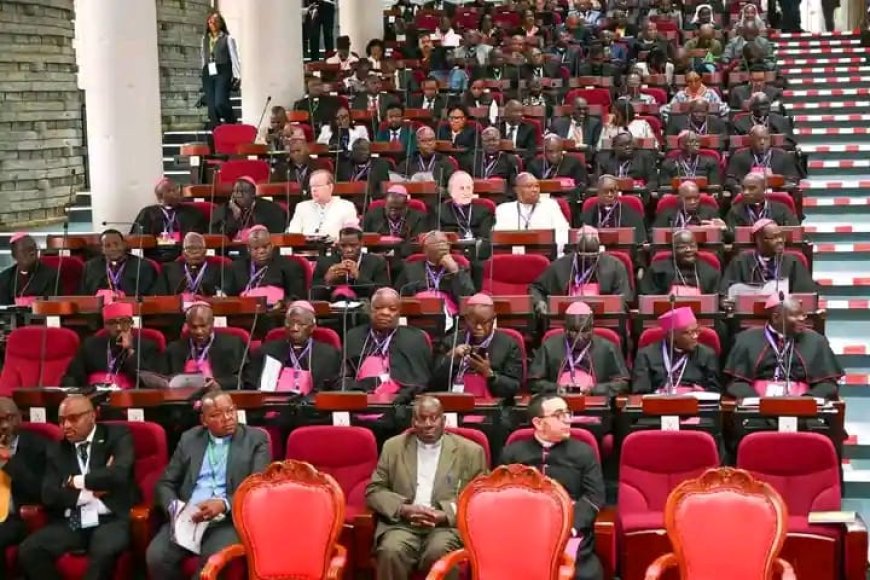
As the 21st plenary assembly of the association of member episcopal conferences in Eastern Africa (AMECEA) convenes in Nairobi under the theme "AMECEA's Synodal Journey with young People: building bridges of communion, hope, Justice and good governance," it is important to understand the nature of this gathering and the authority it exercises within the Catholic Church.
The AMECEA plenary assembly is the association's highest pastoral decision-making forum.
It brings together bishops from the member Episcopal conferences to pray, reflect, discern and agree on common pastoral priorities for the Church in Eastern Africa.
It is not a legislative body, nor does it deal with matters of doctrine or canon law.
Through presentations, discussions, prayer and communal discernment, the bishops seek practical pastoral responses to the challenges facing the region, in this plenary they will deal with issues particularly those affecting young people and the Church's synodal journey.
The Assembly's conclusions take the form of pastoral recommendations that guide the common mission of AMECEA and encourage greater collaboration among its member Churches.
The presence of Cardinal Michael Czerny, S.J., Prefect of the dicastery for promoting integral human development, as the representative of Pope Leo XIV, reflects the close communion between AMECEA and the universal Church.
His participation is a sign of the Holy Father's support and encouragement for the bishops' pastoral mission, while the assembly itself remains a regional forum for pastoral discernment rather than a legislative body of the Holy See.
It is important to note that at the continental level, the Catholic Church in Africa is united under the Symposium of episcopal conferences of Africa and Madagascar (SECAM), which serves as the umbrella organization for all episcopal conferences and regional episcopal associations across the continent.
SECAM is currently headed by Fridolin Cardinal Ambongo Besungu, OFM Cap, Archbishop of Kinshasa, as its President.
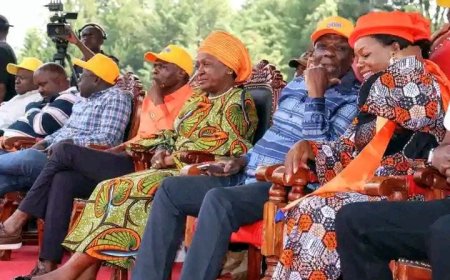
To facilitate collaboration across the continent, SECAM is organized into several regional episcopal bodies as follows: Leaders from Church and Government today underscored the values of communion, hope, justice, and good governance during the ongoing AMECEA proceedings, while making a strong appeal to young people to become responsible builders of Africa’s future.
In Eastern Africa, AMECEA brings together the episcopal conferences of Ethiopia, Eritrea, Kenya, Malawi, South Sudan, Sudan, Tanzania, Uganda and Zambia, with the Apostolic Vicariate of Djibouti and the Diocese of Mogadishu participating as associate members.
Central Africa is served by ACEAC (Association of episcopal conferences of Central Africa), comprising Burundi, the Democratic Republic of the Congo and Rwanda. ACERAC (Association of episcopal conferences of the Central African Region) includes Cameroon, Chad, the Central African Republic, Congo-Brazzaville, Equatorial Guinea and Gabon.
In West Africa, collaboration is fostered through RECOWA/CERAO (Regional episcopal conference of West Africa), which unites the epiiscopal conferences of the region's English, French and Portuguese-speaking countries.
Southern Africa is served by IMBISA (Inter-Regional Meeting of the Bishops of Southern Africa), bringing together the bishops of Angola and São Tomé, Botswana, Eswatini, Lesotho, Mozambique, Namibia, South Africa and Zimbabwe.
The bishops of North Africa belong to CERNA (Regional episcopal conference of North Africa). CEDOI (Conférence Épiscopale de l'Océan Indien) serves Madagascar and the islands of the Indian Ocean.
Note that Egypt has its own regional body, the Assembly of the Catholic hierarchy of Egypt (AHCE), which brings together the Catholic hierarchs of the different Catholic Churches "sui iuris" present in the country.
Together, these regional associations strengthen collaboration in evangelization, pastoral planning and social engagement while enabling the bishops to respond collectively to the unique challenges facing their respective regions.
Through SECAM, they remain united in their mission and in full communion with the Holy See.
What's Your Reaction?