




















G20 to Bolster Sustainable Development Through Life Economies Institutionalization
These life economies will offer a people- and planet-centered development model aligned with the SDGs and Africa’s Agenda 2063.

BY Wakhungu Andanje
As calls for funding sustainable development goals SDGs and Africa agenda 2063, took centre stage at the 4th G20 development working group (DWG) meeting, there is need for institutionalizing life economies that will speed up delivery and financing of the goals.
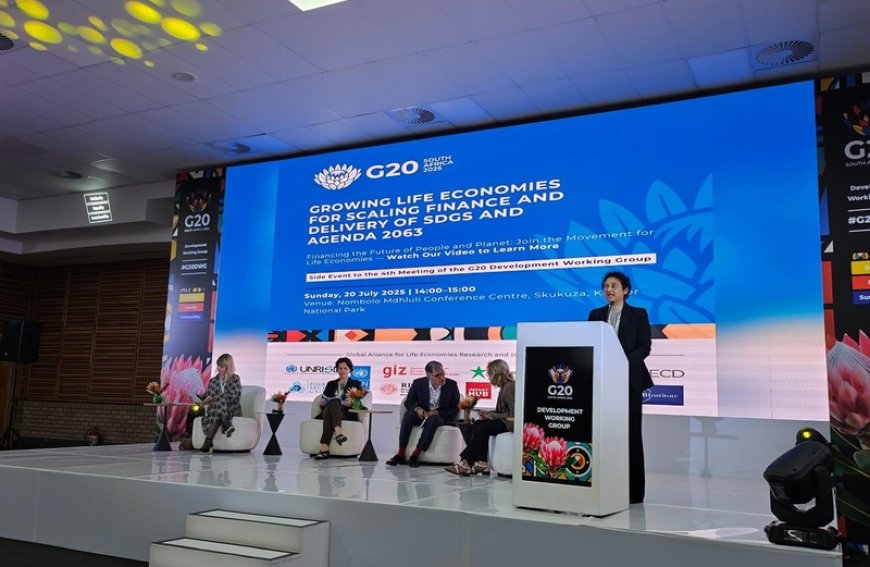
In his keynote address at the Kruger national park, South Africa,Dr. Patrick Olomo, acting director of economic development, integration and trade at the African union commission (AUC), underscored the importance and opportunity of the moment that despite the traditional gross domestic product(GDP)-driven models having taken Africa far, the challenges and opportunities it faces currently needs new economic frameworks.
“Life economic systems being presented by the life economies alignment is key as it embeds well-being, shared responsibility, and environmental stewardship at their core.” Dr. Olomo emphasized the need for all the G20 countries embracing this emerging practice practically.
“This is not theory, it’s an emerging pattern within all G20 countries, let us, all attending this meeting broadcast the new development paradigm, one where prosperity reflects thriving societies and ecosystems,besides the economic growth alone.”
Giving his closing remarks,Prof.Bartholomew Kingsly Armah emphasized that Life Economies are no longer just a mere aspirational concepts but a reality meant to transform the continent’s sustainable development goals.
“Life economy principles have made possible social protection and ecological regeneration to inclusive finance and new corporate forms”he said.
He added that these will assist in realizing the continent life as the principles are realities in also shaping policies, enterprises, and legal reforms across regions.” he said.
“These life economies will offer a people- and planet-centered development model aligned with the SDGs and Africa’s Agenda 2063.
“This isn’t just theory—it’s a call to action” he confirmed. The event, crowned “Growing Life Economies for Scaling Finance and Delivery of the SDGs and Agenda 2063,” brought on board senior policymakers, development experts, and think-tanks from India, Brazil, Germany, the African Union, the European Union, and international organizations.
During the event speakers highlighted how Life Economy strategies, such as circular economy policies, social stock exchanges, and well-being budgets, are delivering tangible results in job creation, climate resilience, and social equity.
Prof. Armah evaluated the urgency of moving from “fragmented initiatives to coordinated and saleable interventions.”
He identified the global alliance for life economies research and innovation (GALERI) as a voluntary, and inclusive mechanism to foster collaboration, evidence-sharing, and policy co-creation, offering a concrete path to institutionalize momentum and scale impact across G20 countries and beyond.
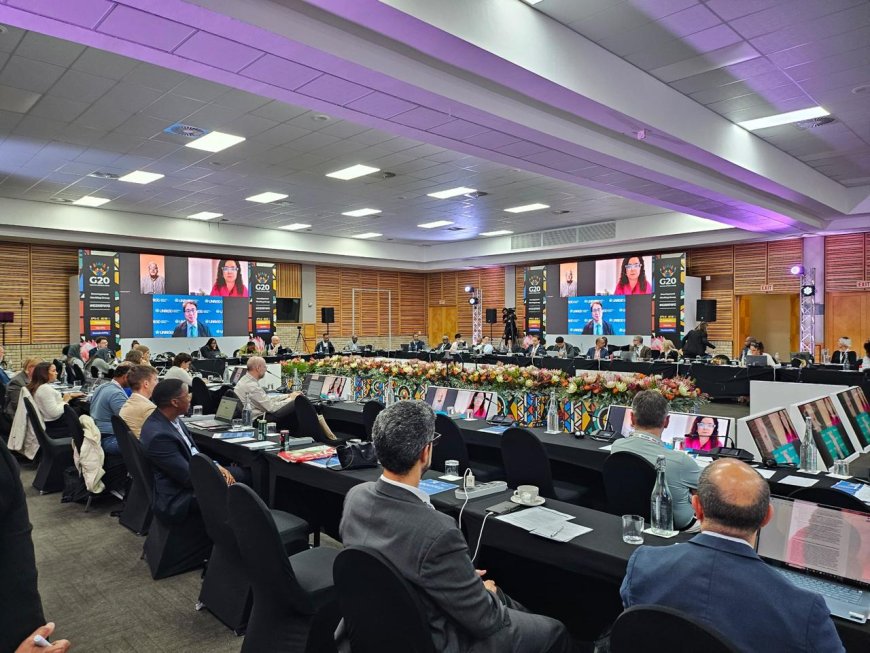
The African union development agency (AUDA)-NEPAD reassured its intentions to continue supporting the journey towards realizing Life economies as a practical and transformative framework aligned with development working groups (DWG) priorities, including social protection floors, domestic resource mobilization, and finance for sustainable development.
The event concluded was also acknowledgment by the South Africa’s leadership and insights from Ms. Josephilda Nhlapo-Hlope, chair of the G20 DWG, for championing this platform under South Africa’s G20 Presidency.
Launched under India’s G20 Presidency and recognized as a knowledge partner during Brazil’s Presidency, GALERI is a global platform for advancing Life Economy approaches.
It brings encompasses governments, international organizations, academia, investors, and innovators to co-create tools, research, and policies that will push for ecological regeneration, social equity, and long-term resilience into development strategies.
What's Your Reaction?